
Ever feel like “digital marketing” is an exclusive club that you can’t access? You hear terms like SEO, PPC, and Content Funnels tossed around, and it all seems incredibly complicated.
You’re not alone.
The good news is that digital marketing isn’t magic. It’s a set of useful tools and strategies that anyone can learn. In today’s world, having this understanding is one of the best ways to find customers, build a brand, and grow your business. This guide will simplify everything. There will be no confusing jargon, just a straightforward roadmap to help you get started. By the end, you’ll understand what digital marketing is and have a clear idea of your first steps.

What Is Digital Marketing, Really?
Let’s keep it simple. Digital marketing is simply marketing using online channels.
- Your Customers Are Online: Whether you sell custom cakes or offer consulting services, your potential customers are looking for solutions on Google, scrolling through Instagram, and asking for recommendations on Facebook.
- It’s Cost-Effective: Many digital marketing methods provide a much higher return on investment compared to traditional advertising. You can connect with thousands of people for less than the cost of a TV commercial or print ad.
- It’s Measurable: How many people saw your billboard last week? It’s hard to say. How many people clicked on your ad, visited your website, and made a purchase? Digital marketing tools can give you exact numbers, so you can see what works and what doesn’t.
- It Levels the Playing Field: A small local shop can compete with a big national chain online with a smart digital strategy.

The 5 Core Pillars of Digital Marketing
Let’s break down the main components. You don’t need to master them all at once. Start by understanding what they are and then choose one or two to focus on.
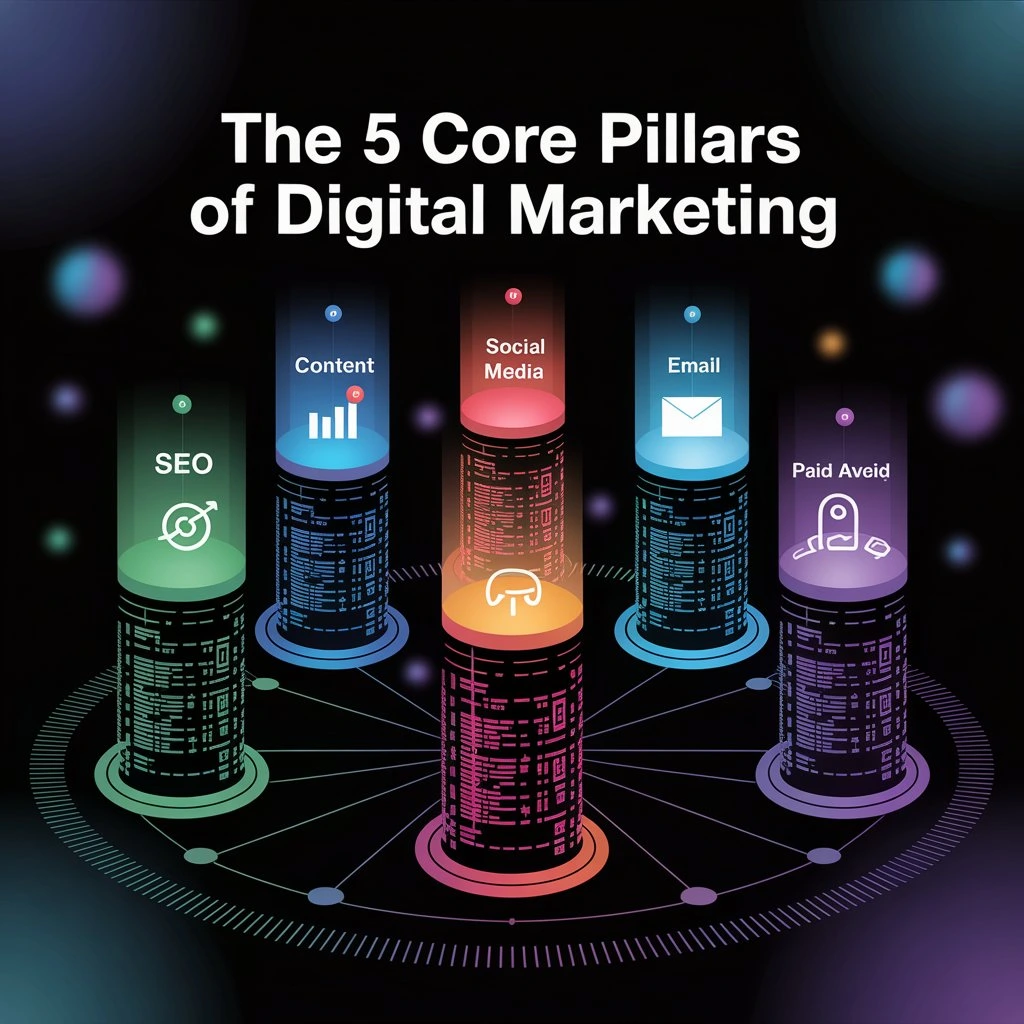
1. Search Engine Optimization (SEO)
What it is: The process of optimizing your website to rank higher in search engine results (like on Google) for specific keywords related to your business. In Simple Terms: Making it easy for people to find you when they search for what you offer.
Why it matters: A top spot on Google provides free, relevant traffic 24/7. People who find you through search are actively looking for solutions you provide. Getting Started Tip: Identify the top 5 phrases your ideal customers would search for (e.g., “best handmade pizza in Brooklyn”). Ensure those phrases are naturally included on your website’s homepage and service pages.
2. Content Marketing
What it is: Creating and sharing valuable, relevant, and consistent content to attract and keep a clearly defined audience.
In Simple Terms: Instead of pushing your products, you’re offering useful information that builds trust and authority. This blog post is content marketing! Why it matters: It builds relationships with your audience. When it’s time to buy, they’ll choose the brand that has been there for them. It also supports your SEO and social media efforts. Getting Started Tip: Write a blog post answering the most common question you get from customers. It could be a how-to guide, a list of tips, or an explanation of a complex topic.
3. Social Media Marketing (SMM)
What it is: Using social media platforms (like Instagram, Facebook, LinkedIn, TikTok) to build your brand, connect with your audience, drive traffic, and generate sales. In Simple Terms: Joining the conversation where your customers hang out. Why it matters: It’s a direct line to your community. You can showcase your brand’s personality, get instant feedback, and run targeted ads. Getting Started Tip: Don’t try to be on every platform. Choose the one where your target audience is most active. If you’re a B2B consultant, that’s likely LinkedIn. If you sell visual products, start with Instagram or Pinterest. Post consistently, even if it’s just three times a week.
4. Pay-Per-Click (PPC) Advertising
What it is: A form of internet marketing where you pay a fee each time someone clicks on one of your ads. Google Ads is the most common type.
In Simple Terms: Paying to place your website at the top of Google search results instantly. Why it matters: While SEO takes time, PPC brings immediate traffic. It’s great for testing offers, promoting a time-sensitive sale, or quickly generating leads.
Getting Started Tip: Start with a small daily budget on Google Ads (5 to 10 dollars). Target a specific, “high-intent” keyword like “emergency plumber near me” (if you’re a plumber) to ensure your clicks are from people ready to act.
5. Email Marketing
What it is: Sending commercial messages to people who have agreed to let you contact them. In Simple Terms: Communicating directly with your most loyal fans and customers in their inbox. Why it matters: You own your email list. Unlike social media followers, no algorithm can limit your ability to reach them. It consistently delivers the highest return on investment of any marketing channel.
Getting Started Tip: Add a simple signup form to your website and offer a small incentive (e.g., “Get 10% off your first order” or “Download our free guide”). Start collecting emails from day one.
Importance of Freelance Digital Marketers
Freelance digital marketers play a vital role in today’s business landscape, especially for startups, small businesses, and even large companies looking for flexible and cost-effective marketing solutions. Here’s why they are important.
A freelance digital marketing specialist can provide flexible, efficient, and result-oriented support for businesses aiming to grow online without high overhead costs. Many such professionals specialize in services like social media management, digital mentoring, and more.